
Axioma Taps Morokoff as Head of Research
Morokoff has previously worked at S&P, Moody's and Goldman Sachs.
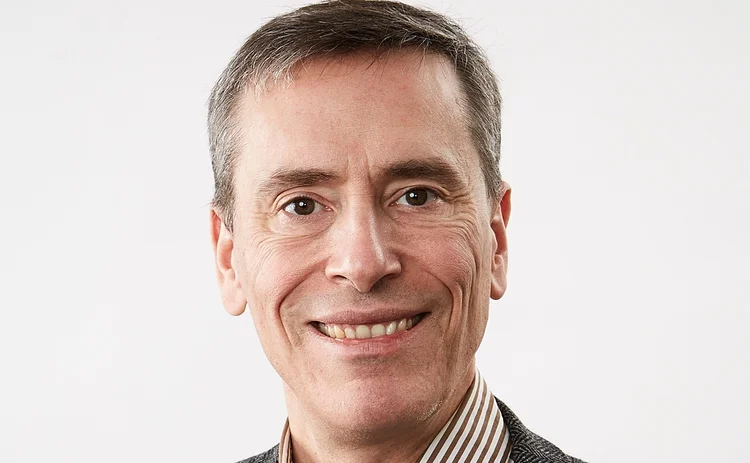

In his new role, Morokoff is charged with helping the risk analytics provider expand its multi-asset class and equity investment research offerings.
He joins from Standard & Poor's Ratings Service, where he has served since 2006, most recently as the head of the company's Global Quantitative Analytics and Research Group.
"Superior research helps us create innovative products that give our clients a competitive advantage," said Sebastian Ceria, CEO of Axioma, in a statement. "Having worked extensively in credit-risk and market-risk modeling, with a focus on numerical analysis for portfolio risk management issues, Bill will help us continue to deliver on our value proposition to clients."
Prior to S&P, Morokoff worked at Moody's as acting head of research, and at Goldman Sachs before that, where he was a vice president in the risk department working on market risk in the quantitative modeling group.
Only users who have a paid subscription or are part of a corporate subscription are able to print or copy content.
To access these options, along with all other subscription benefits, please contact info@waterstechnology.com or view our subscription options here: https://subscriptions.waterstechnology.com/subscribe
You are currently unable to print this content. Please contact info@waterstechnology.com to find out more.
You are currently unable to copy this content. Please contact info@waterstechnology.com to find out more.
Copyright Infopro Digital Limited. All rights reserved.
As outlined in our terms and conditions, https://www.infopro-digital.com/terms-and-conditions/subscriptions/ (point 2.4), printing is limited to a single copy.
If you would like to purchase additional rights please email info@waterstechnology.com
Copyright Infopro Digital Limited. All rights reserved.
You may share this content using our article tools. As outlined in our terms and conditions, https://www.infopro-digital.com/terms-and-conditions/subscriptions/ (clause 2.4), an Authorised User may only make one copy of the materials for their own personal use. You must also comply with the restrictions in clause 2.5.
If you would like to purchase additional rights please email info@waterstechnology.com
More on Emerging Technologies
BNY inks AI deal with Google, Broadridge moves proxy voting to AWS, Expero delivers ICE market data, and more
The Waters Cooler: TSX Venture Exchange data hits the blockchain, SmartTrade acquires Kace, and garage doors link to cloud costs in this week’s news roundup.

Everyone wants to tokenize the assets. What about the data?
The IMD Wrap: With exchanges moving market data on-chain, Wei-Shen believes there’s a need to standardize licensing agreements.

Google, CME say they’ve proved cloud can support HFT—now what?
After demonstrating in September that ultra-low-latency trading can be facilitated in the cloud, the exchange and tech giant are hoping to see barriers to entry come down, particularly as overnight trading looms.

Waters Wavelength Ep. 342: LexisNexis Risk Solutions’ Sophie Lagouanelle
This week, Sophie Lagouanelle, chief product officer for financial crime compliance at LNRS, joins the podcast to discuss trends in the space moving into 2026.
Citadel Securities, BlackRock, Nasdaq mull tokenized equities’ impact on regulations
An SEC panel of broker-dealers, market-makers and crypto specialists debated the ramifications of a future with tokenized equities.

BlackRock and AccessFintech partner, LSEG collabs with OpenAI, Apex launches Pisces service, and more
The Waters Cooler: CJC launches MDC service, Centreon secures Sixth Street investment, UK bond CT update, and more in this week’s news roundup.

Tokenized assets draw interest, but regulation lags behind
Regulators around the globe are showing increased interest in tokenization, but concretely identifying and implementing guardrails and ground rules for tokenized products has remained slow.

CME, LSEG align on market data licensing in GenAI era
The two major exchanges say they are licensing the use case—not the technology.
