
Divorcing Bitcoin From Blockchain
Anthony says first we need to make clear, once and for all, that 'bitcoin' and 'blockchain' are not used interchangeably.
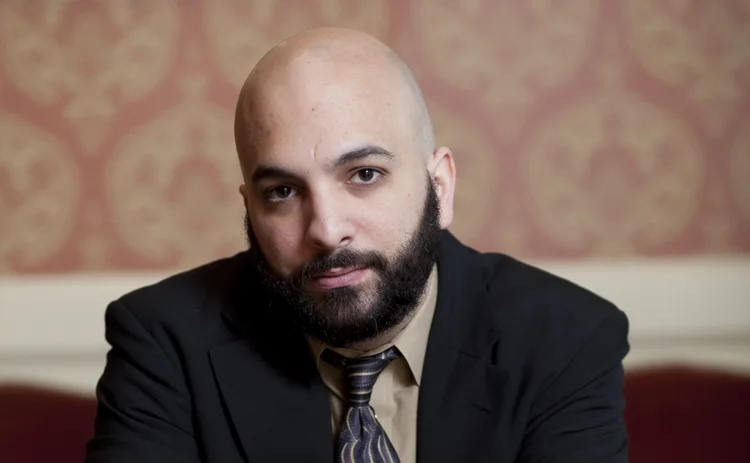

"Bitcoin is the currency of DDoS attackers and other miscreants; blockchain has some capability." This was the sentiment of Mike McGovern, CIO at Brown Brothers Harriman, who was speaking on a panel at this year's Buy-Side Technology North American Summit.
While McGovern was making a joke to punctuate a point, there's also an underlying truth there: Bitcoin, as a currency, is useful as an exchange-traded product and store of value, but the blockchain ledger is what has the most potential to revolutionize how financial-services firms transact. It's important to remember that they're two separate things, because right now these two things are at times incorrectly used interchangeably.
"Everyone is looking at blockchain," McGovern said. "We're looking at it. We've set aside some funds in our 2016 innovation budget around R&D and working with colleagues on the buy side to think about how it can be applied."
John Shea, CIO at Eaton Vance, echoed McGovern's sentiments, and compared the evolution of the blockchain to that of the cloud.
"What's funny about the blockchain is that it's like what the cloud was years ago: everyone is talking about the cloud and no one really knew what the cloud was, but they're talking about it," he said. "You have to disconnect bitcoin from blockchain ─ blockchain's the ledger; bitcoin's the money."
At its core, blockchain is an append-only database where you write once, erase never, Shea said. It's a distributed, encrypted database with the foundation being transactions or virtual currency.
Even still, right now firms are playing a game of wait-and-see.
"There's a ton of possibilities here, but it's not at the ‘hey, we want to use this thing right now' stage," he said, with settlement being the most logical place for blockchain adoption.
Trust Still at Issue?
The other area that Shea saw the most potential was for cybersecurity.
"I think that there's going to be a big drive towards blockchain just from a cybersecurity perspective. You can't trust an email; wire fraud continues to increase. Blockchain is one possible technology that can help combat some of our challenges with wire fraud and cybersecurity. But it's something that the industry has to adopt," before his firm would jump fully onboard with blockchain solutions, he said.
McGovern noted that blockchain's anonymity, at this point, will also give firms pause when it comes to adoption.
"I do think it will have an impact longer term, but at its heart, what I see is essentially replacing the centralized ledger provided by a trusted party with another type of ledger, and the anonymity that's built into the technology is unattractive for institutional organizations," the CIO said. "The most viable models I've seen are where organizations are embracing the technology but incorporating around it traditional trust banking, regulated entity kind of business model," where the same legal and regulatory framework that operate today are still in place.
I've written this before, but exact definitions and terms matter especially when discussing a subject that is opaque.
When talking about the potential of something, clarity matters. So to start, let's make sure that we're using the terms bitcoin and blockchain correctly.
Only users who have a paid subscription or are part of a corporate subscription are able to print or copy content.
To access these options, along with all other subscription benefits, please contact info@waterstechnology.com or view our subscription options here: https://subscriptions.waterstechnology.com/subscribe
You are currently unable to print this content. Please contact info@waterstechnology.com to find out more.
You are currently unable to copy this content. Please contact info@waterstechnology.com to find out more.
Copyright Infopro Digital Limited. All rights reserved.
As outlined in our terms and conditions, https://www.infopro-digital.com/terms-and-conditions/subscriptions/ (point 2.4), printing is limited to a single copy.
If you would like to purchase additional rights please email info@waterstechnology.com
Copyright Infopro Digital Limited. All rights reserved.
You may share this content using our article tools. As outlined in our terms and conditions, https://www.infopro-digital.com/terms-and-conditions/subscriptions/ (clause 2.4), an Authorised User may only make one copy of the materials for their own personal use. You must also comply with the restrictions in clause 2.5.
If you would like to purchase additional rights please email info@waterstechnology.com
More on Emerging Technologies
The GPU compute index race begins
Major exchanges are partnering with a new crop of benchmark providers to create a tradable asset class around GPU compute.

Agents are invading. Will it stick?
The Waters Wrap: Agentic features are becoming commonplace in the workflow tools of capital markets. Nyela wonders if the trend is sustainable.

TS Imagine launches new agentic platform
TSIQ can act based on client queries, using built-in agent “personas” that can be modified by users on a case-by-case basis.

BBH’s new tech affiliate, Broadridge’s tokenization platform, and more
The Waters Cooler: A recap of the major tech and data news from the past week in the capital markets.

Waters Wavelength Ep. 358: Tradeweb’s Chris Bruner
This week, Tradeweb’s chief product officer joins the podcast to discuss fixed income, prediction markets, agentic AI, and overnight trading.

Can AI beat exceptions out of the back office?
The Waters Wrap: Agentic AI can help operations teams tackle exceptions. But first, they need to get their house in order, writes Wei-Shen.

Banks brace for higher costs as chip memory runs short
A recent report from Gartner shows the price of memory is rising, putting the squeeze on firms eager to adopt AI.

Manuela Veloso on how banks can make their AI dreams reality
Former JP Morgan head of AI research says open-ended enquiry will unlock technology’s full potential.
